Rest Advantages in Schedule Management: Parallels Between Football Fixture Congestion and Horse Racing Campaign Spacing with Applications to Tennis Tournament Loads
Tina Russell · Sep 5, 2026
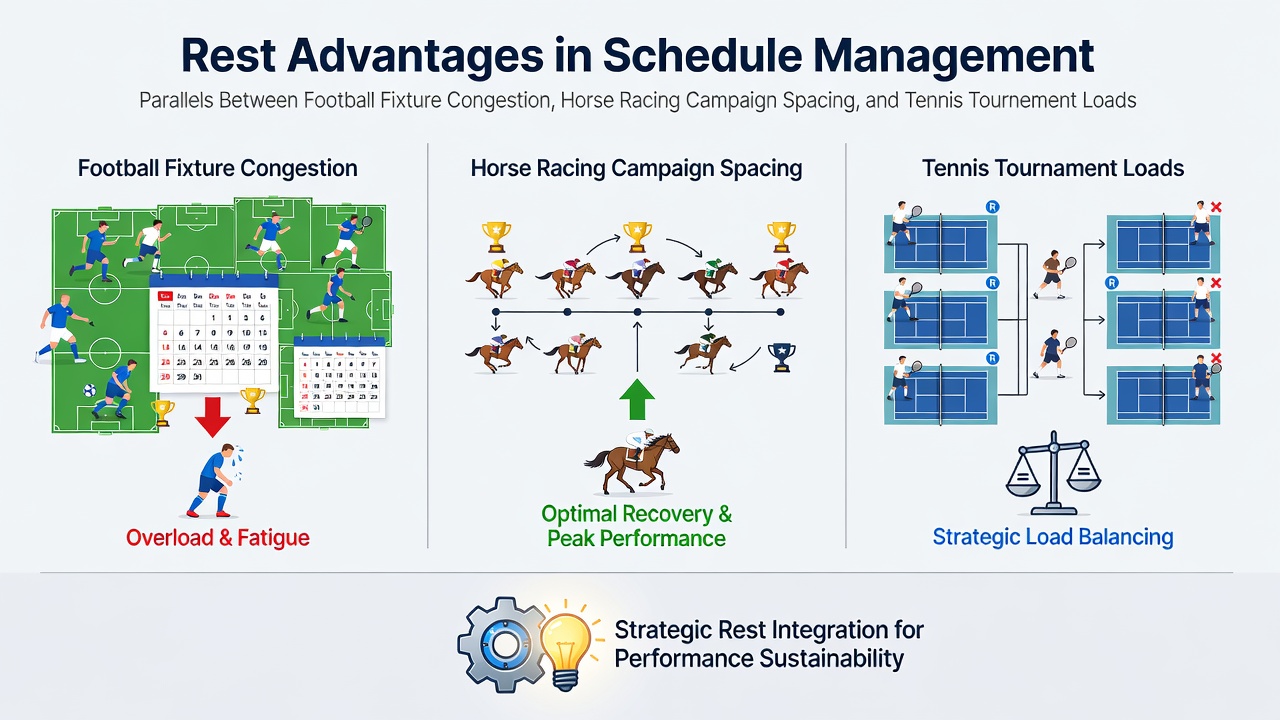
Rest Advantages in Schedule Management: Parallels Between Football Fixture Congestion and Horse Racing Campaign Spacing with Applications to Tennis Tournament Loads
Schedule management across elite sports hinges on strategic rest allocation, where data from multiple disciplines reveals consistent performance patterns tied to recovery windows. In football, fixture congestion during periods such as the September 2026 international break and domestic league restarts creates measurable strains on player availability, whereas horse racing trainers apply deliberate spacing between races to maintain equine conditioning, and tennis governing bodies adjust tournament loads to accommodate multi-week recovery cycles for competitors.
Football Fixture Patterns and Recovery Data
European leagues record peak fixture density between August and December, with teams in the English Premier League and UEFA Champions League often facing three matches within eight days during that stretch; studies compiled by the FIFA Medical Centre of Excellence network document elevated injury incidence rates when rest falls below 72 hours between high-intensity games. Midfielders and full-backs show the sharpest drops in high-speed running metrics after repeated short-turnaround fixtures, prompting clubs to rotate squads using GPS-tracked workload thresholds that flag cumulative fatigue beyond 30 percent above baseline.
Horse Racing Campaign Spacing Practices
Thoroughbred campaigns follow structured intervals that trainers calibrate according to race distance and surface type, with Group 1 performers typically allotted 21 to 35 days between starts to allow muscle glycogen replenishment and tendon adaptation. Australian Racing Board records indicate that horses returning after 28-day gaps maintain win percentages 12 to 15 points higher than those racing inside 14 days, while European flat season data from 2025 shows that stayers entered in sequential autumn targets without adequate spacing post lower strike rates once cumulative starts exceed six within four months. Handlers monitor blood parameters and stride analysis to fine-tune these windows, producing observable differences in finishing effort across consecutive campaigns.
Tennis Tournament Load Distribution
The ATP and WTA calendars compress elite players into 10-month seasons where top-ranked athletes contest between 18 and 25 events annually, yet data aggregated by the Tennis Australia performance institute highlights improved win rates when competitors insert at least one full week without matches after five-set exertions. Hard-court swings in North America and Asia during late summer and early autumn frequently compress recovery, leading to documented declines in serve velocity and movement efficiency when consecutive tournaments allow fewer than four rest days. Scheduling algorithms now incorporate surface transition times and travel distances to mitigate these loads, with players who accept byes or reduced schedules posting fewer physical withdrawals.
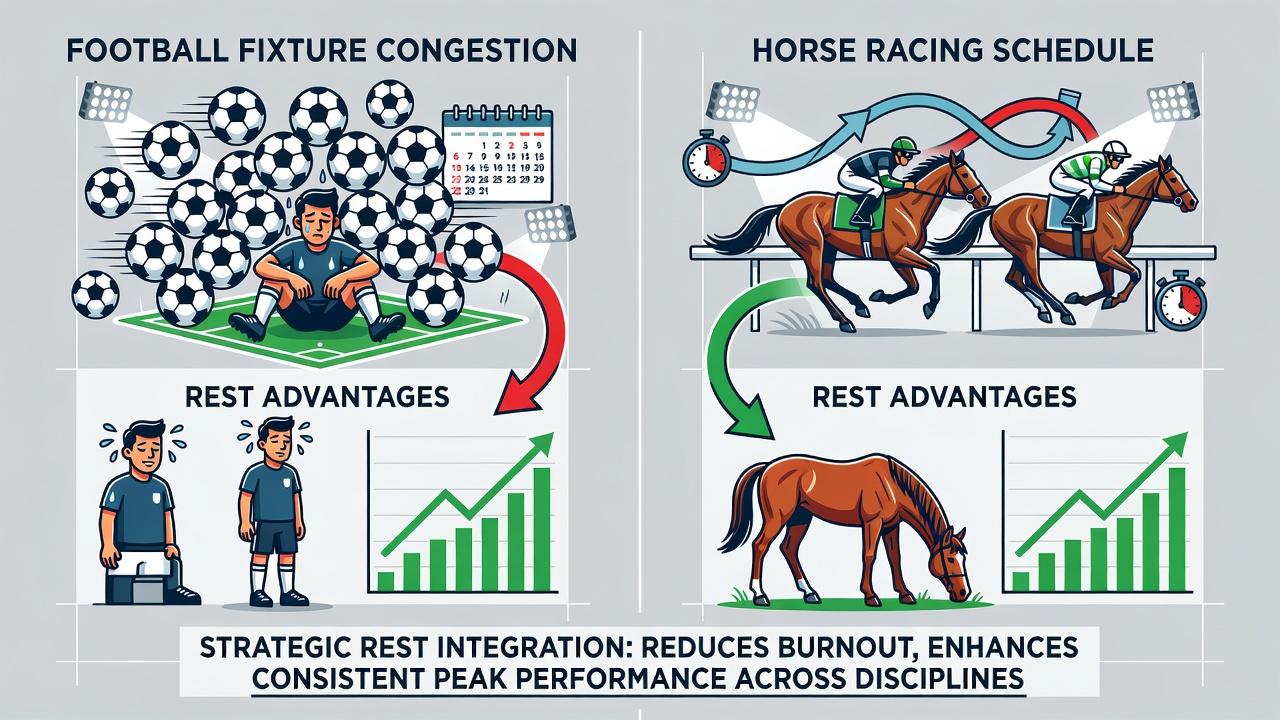
Cross-Sport Parallels in Spacing Strategies
Each discipline demonstrates that rest functions as a controllable variable rather than a fixed calendar slot, with football clubs adopting mid-season micro-cycles that mirror the 28-day equine recovery benchmarks and tennis players mirroring those intervals through selective event entry. Observers note that congested football periods in September 2026 coincide with the tail end of European summer transfers, forcing managers to balance new signings against established players whose accumulated minutes already approach seasonal thresholds. Trainers in horse racing apply similar logic when mapping autumn targets after summer campaigns, while tennis coaches reference historical surface-specific recovery curves to decide whether a player should contest an optional indoor event or preserve energy for the year-end finals.
Applications to Modern Scheduling Tools
Performance analysts increasingly merge GPS, heart-rate variability, and biomechanical datasets to forecast optimal rest windows across the three sports, producing models that adjust for age, position or race distance, and surface speed. Leagues experimenting with expanded winter breaks or additional substitute slots in 2026 demonstrate measurable reductions in soft-tissue injuries when average rest exceeds 96 hours, while racing authorities that enforce minimum intervals between graded events report fewer long-term soundness issues. Tennis federations testing protected ranking provisions for players returning from extended recovery periods achieve higher retention rates among competitors who would otherwise withdraw from consecutive hard-court swings. These tools converge on one operational principle: rest intervals calibrated to workload history deliver measurable consistency advantages whether measured in league points, purse earnings, or ranking points.
Conclusion
Comparative analysis of football fixture lists, thoroughbred race calendars, and tennis tournament grids confirms that deliberate spacing produces parallel gains in availability and output metrics. Organizations that embed recovery thresholds into planning protocols sustain performance across extended seasons while those that compress schedules encounter predictable drops in key indicators. As 2026 calendars continue to evolve, the integration of cross-sport recovery data offers a practical framework for maintaining competitive balance without compromising athlete welfare.